English
 German
 French
 Italian
 Spanish
 Chinese
Gait analysis system for rodents
CatWalk XT









Trusted by researchers around the world
Dr. Price: "I think the CatWalk is probably one of the most sophisticated pieces of equipment that I have seen."
NeuroPore Therapies (San Diego, California) does important research in the field of neurodegenerative disorders. Dr. Diana Price, Dr. Asma Khan and Robert Johnson are currently using CatWalk XT to study Parkinson’s disease. Look what they say about their CatWalk system.
Who uses CatWalk XT?
CatWalk XT gait analysis has been validated in research and experimental procedures for several (neurological) disorders and lesions. Examples include spinal cord injury and other nerve injuries, neuropathic pain, arthritis, stroke, Parkinson’s, Cerebellar ataxia, traumatic brain injury, peripheral nerve damage, and more.
It does not matter if gait is affected due to genetic, chemical or physical injury to the central nervous system, peripheral nervous system, or skeletal or muscle functioning. As long as your animal is able to traverse the CatWalk runway, you can evaluate its gait.

"Our lab has been using CatWalk XT since 2015, and we have found that it is an invaluable tool for our research and provides a reliable and detailed analysis of gait and how it varies in our disease models."
Pediatric Storage Disorders Laboratory (PSDL)|Washington University School of Medicine, St. Louis, MO, USA
Turn-key system
CatWalk XT is a complete highly sensitive tool to assess gait and locomotion. The footprints are captured while the rat or mouse voluntarily traverses a glass plate towards a goal box.
The system consists of:
- A corridor that directs the free movement of your subject in a straight line to facilitate learning and improve reproducibility
- A hardened glass walkway that enables CatWalk XT's Illuminated Footprints technology
- A high speed color camera for extremely accurate spatial and temporal resolution
- And the CatWalk XT software for the recording and automated analysis of the locomotor ability of your rodents
CatWalk XT vs Treadmills
When assessing gait, researchers traditionally opt for either forced treadmill movement or unforced walkway analysis. Utilizing unforced gait analysis offers several advantages over forced methods. It allows animals to exhibit natural walking behavior, moving at a pace dictated by their condition or endurance.
On a treadmill, rats or mice often adjust their speed to match the treadmill's pace, inducing stress in the animal. This stress, in turn, compromises the animal's gait pattern, resulting in unreliable data. The CatWalk XT system, however, is designed around the natural walking behavior of the animal. The inclusion of a goalbox at the walkway's end ensures consistent motivation for the animal to move reliably to the endpoint.

Advanced gait analysis
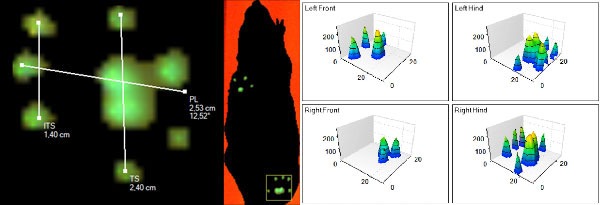
Due to the high temporal and spatial resolution of the color camera in combination with the Illuminated Footprints technology, the CatWalk XT software identifies subtle changes within the dimensions, position and timing of each footprint. Over 100 parameters are calculated for qualitative and quantitative analysis of individual footfalls and gait!
How does it work
The Automatic Footprint Classification Module takes the manual labor of classifying each footprint out of your hands, cutting your experiment time in half, while keeping you in control.
The Interactive Footprints Measurements module allows you to look in more detail at each footprint itself. You can measure toe spread, intermediate toe spread, and print length in order to calculate the Sciatic Functional Index. Furthermore, you can use it to measure the angle of the pawprint in relation to the body axis of the rodent.
"The present study demonstrates that CatWalk allows an automated, fast, objective and complete analysis of gait related changes after acute pain."
Dr. A.F. Gabriel et al (2007)|In Journal of Neuroscience Methods
Free white paper
Getting the perfect run
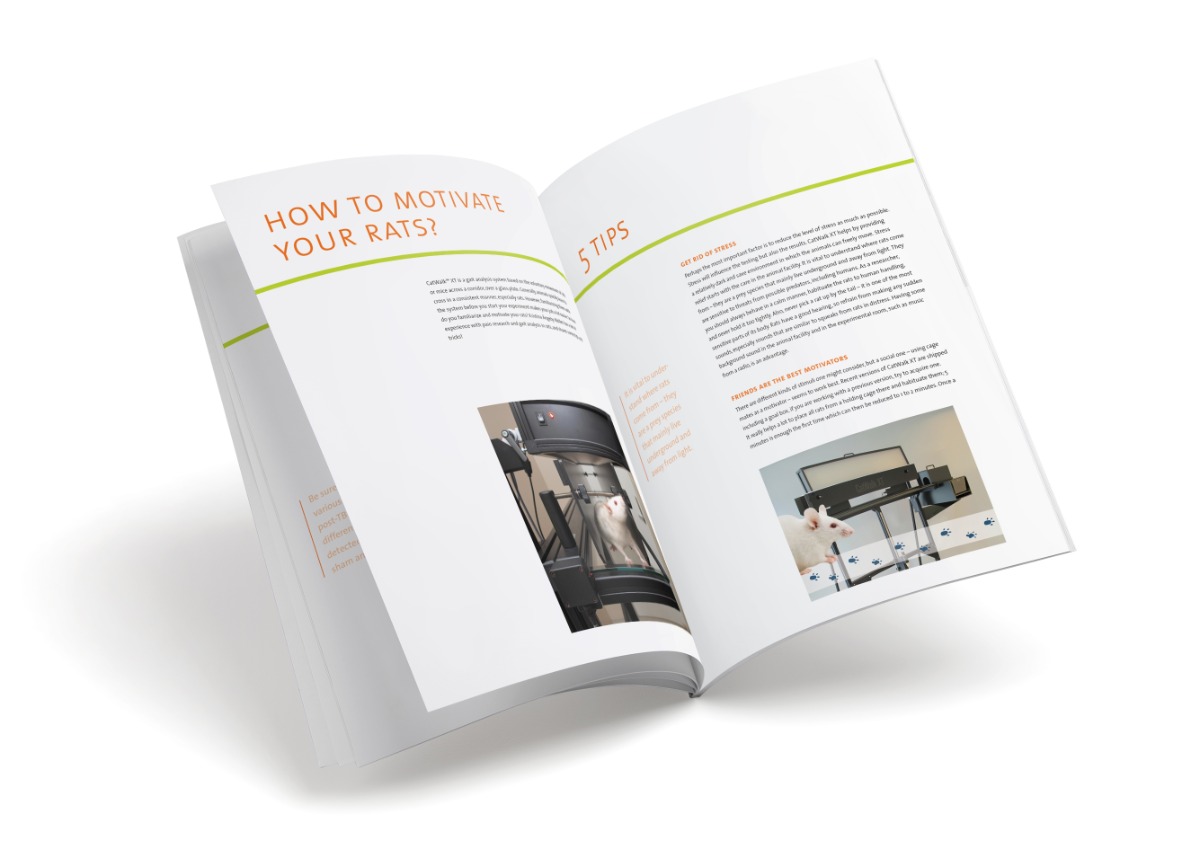
CatWalk™ XT is a gait analysis system based on the voluntary movement of rats or mice across a corridor, over a glass plate. Generally, animals quickly learn to cross in a consistent manner, especially rats. However, familiarizing them with the system before you start your experiment makes your job a lot easier. So how do you familiarize and motivate your rats?
Kristina Ängeby Möller has a lot of experience with pain research and gait analysis in rats, and shares some tips and tricks!
Relevant blogs
Noldus top tips! Our latest must-read animal blogs
Dive into our latest collection of top behavioral research blogs! Discover fascinating studies and learn how Noldus tools can advance your research.
Time based relations in gait analysis
I have written two blog posts about static gait parameters. Now it’s time to talk about all four paws, and the time based relationships between them. If you ask me, we’ve been saving the best blog post for last!