English
 German
 French
 Italian
 Spanish
 Chinese
Tools for
Social behavior in zebrafish
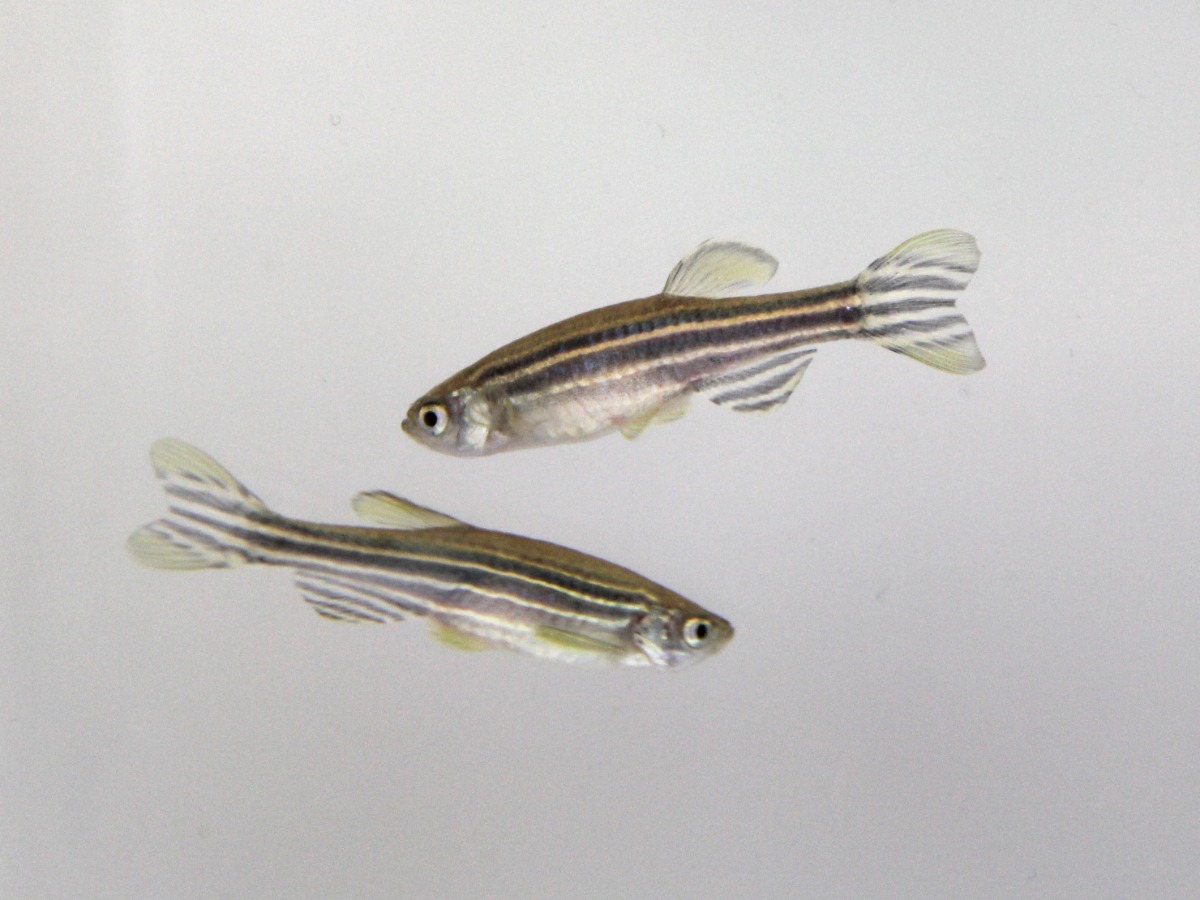
Being social animals, zebrafish are an interesting model for studying psychiatric disorders that affect social behavior, such as schizophrenia and autism. Related symptoms are an important target in pharmaceutical and behavioral therapies.
Typical studies focus on group size effect, coloration and patterning effects, gender, and fish size, or more specifically on the actual behavioral elements in pharmaceutical and environmental research.
Shoaling and sociability
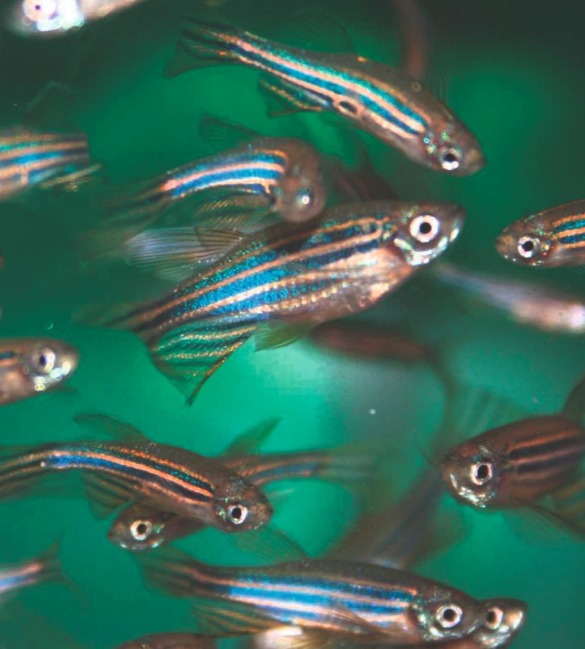
Shoaling is a straightforward expression of social behavior in zebrafish. It is assessed by measuring the distances between each fish continuously or at several points in time. Though this is seemingly easy, it can be a cumbersome task if done manually.
Alternatively, other studies focus on individual social behavior (ex. in a two or three-chambered set-up). Fish are presented with a range of social stimuli (real fish, video images or animations) and the behavior of the fish is recorded.
Challenges in research
The study of zebrafish behavior can include a lot of parameters and assessing these is a lot easier with the right software. Video tracking collects anything from straight-forward inter-fish distances to detailed swim behaviors for you in an efficient and reliable manner.
Watch the movie about zebrafish research at a glance and request a free demo!
Automated methods
EthoVision® XT video tracking offers you automated methods: it detects and tracks fish in a group from a live video feed or video file and measure inter-fish distances continuously in order to assess shoal density or the shoaling tendency of one individual. Typically used parameters include the average distance between fish, the distances between the nearest and farthest neighbor, and the duration of proximity. All these parameters are automatically calculated and visualized alongside your other data in EthoVision XT.

Easily measure specific behaviors
More specific behaviors such swim speed and swim bursts, zig zag motions, distance to social stimuli, path shape, etc., are also easily measured with EthoVision XT.
This software even controls other programs and hardware. You can set up a video screen next to your tank, and include the start and stop of a video in your EthoVision XT protocol - for example you can program your video to start at a certain time point or trigger with the fish showing specific behaviors.
Free white paper
Social behavior in zebrafish
Social behavior is a hot topic in neuroscience research because it is often affected in psychiatric disorders such as schizophrenia and autism. Social dysfunction can have a severe impact on daily functioning, making these symptoms the target of behavioral therapies. Of course, rodents are often used for these types of studies, but some paradigms have successfully been translated to zebrafish studies as well.
Download the white paper to learn how EthoVision XT can benefit your research.

"Because of the large sample sizes, using an automated software is really the only way to realistically analyze and quantify data."
Dr. Christina Semeniuk, associate professor at the University of Windsor, is studying the behaviors of multiple fresh water fish species in the Great Lakes. Together with her research team, she tries to find means and ways to be able to see how animals are doing.
EthoVision XT is helping her Masters and PhD students and her lab as a whole with reliability.
Social buffering
We cope better in an unpleasant situation if we are not alone. Several animals also demonstrate this adaptation, such as zebrafish.
Faustino et al. (Scientific Reports, 2017) tracked freezing behavior and erratic movements of zebrafish in detail, and found that zebrafish handled an aversive stimulus better if they are not alone.
Video tracking from both side and top view
With the use of two cameras, fish were video monitored from the top and from a side view. EthoVision XT was used to track the animals and extract xyz coordinates. From these tracks detailed analysis of freezing behavior and erratic movements was performed to assess fear behavior in the zebrafish.
Reference
Faustino, A.I.; Tacão-Monteiro, A.; Oliveira, R.F. (2017). Mechanisms of social buffering of fear in zebrafish. Scientific Reports, https://doi.org/10.1038/srep44329.
Relevant blogs
The search for robust fear inducing stimuli in zebrafish research
Zebrafish behavioral research has grown by leaps and bounds, and behavioral paradigms are being developed with the aim of better understanding mechanisms that might underlie aberrant behavioral phenotypes.
Studying zebrafish behavior using video tracking software
When it comes to studying zebrafish behavior, video tracking software is the ideal tool. Here we highlight five recent posts about studies on zebrafish behavior where researchers applied video tracking software.