English
 German
 French
 Italian
 Spanish
 Chinese
Tools for
Stress & anxiety research
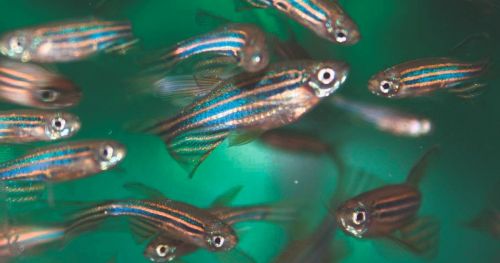
Zebrafish offer a great model in research on fear and anxiety related disorders. A straight-forward but well-validated test is the novel tank diving tests. As zebrafish are put in a novel environment, they typically dwell the bottom at first. The bolder they are, the sooner they will start exploring the top half of the tank and spend more time there.
Horizontal and vertical behaviors
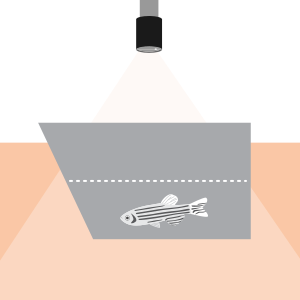
Bottom dwelling behavior and latency to start exploring the upper half of the tank are important indicators of inhibited exploration, which is considered indicative of stress and anxiety. These are useful parameters in the study of anxiolytic and anxiogenic properties of certain compounds. Side-view tracking is a practical approach to measure these parameters.
Set-ups such as open fields and light/dark boxes require a top-view approach to assess whether animals prefer certain sections of the tank.
Swim patterns
The location of the fish in the tank, whether seen from a side or top view, is important and relatively straight-forward to measure. However, many researchers argue that anxiety and stress in fish are also indicated by reduced speed and more erratic movements. This is more difficult to measure manually, but it is an easy task for video tracking software.
Deeper insights
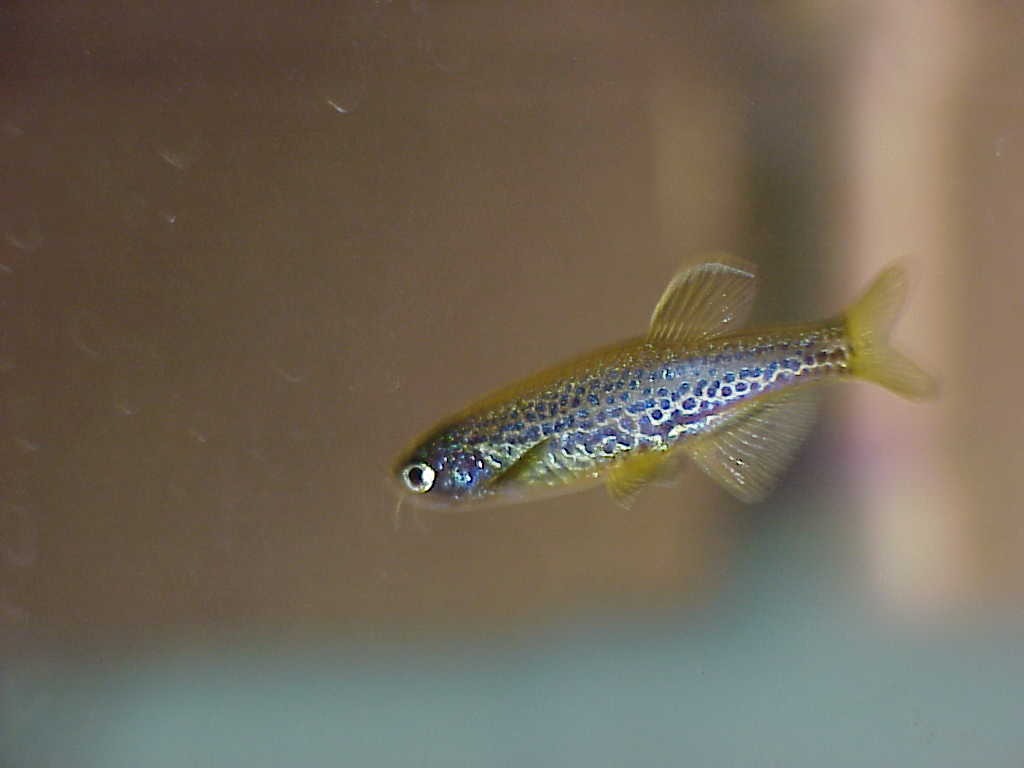
Some studies require an in-depth study of swimming behavior (for example those of a range of potential anxiogenic or anxiolytic substances). The challenge here is that fish swim in 3D. A true assessment of path shape, erratic movement, even velocity cannot be fully gained from a side or top view.
The analysis of 3D swim patterns offers a more detailed analysis of the effect of compounds. For example, at the Kalueff Lab (Tulane University, New Orleans, LA, USA) they found that when examining different effects from known anxiolytics and anxiogenics, 3D tracking revealed much more pronounced differences in zebrafish behavior. In addition, some behavioral effects were even undetected when observations were limited to 2D video tracking.
Tracking in 3D
To analyze swim patterns in a three-dimensional space, researchers can use the Track3D add-on to the video tracking tool EthoVision XT. Based on the calibration of the arena and subsequent combination of the top-view and side-view track from EthoVision XT, Track3D visualizes and analyzes the complete swim path of the fish. It also allows you to calculate a number of movement parameters.
References
- Cachat, J.; Stewart, A.; Utterback, E.; Hart, P.; Gaikwad, S.; Wong, K.; Kyzar, E.; Wu, N.; Kalueff, A.V. (2011). Three-dimensional neurophenotyping of adult zebrafish behavior. PLoS ONE, 6(3), e17597.
- Stewart, A.M.; Grieco, F.; Tegelenbosch, R.A.J.; Kyzar, E.J.; Nguyen, M.; Kaluyeva, A.; Song, C.; Noldus, L.P.J.J.; Kalueff, A.V. (2015). A novel 3D method of locomotor analysis in adult zebrafish: implications for automated detection of CNS drug-evoked phenotypes. Journal of Neuroscience Methods, 255, 66-74.
Relevant blogs

Using zebrafish as an early warning system of neurotoxic substances
How can we use a zebrafish (Danio rerio) embryo model to detect possible neurotoxic chemical mixtures that are difficult to detect with normal chemical analyses?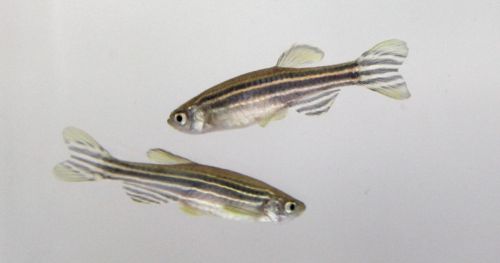
Tracking zebrafish activity to study a key element in circadian rhythmicity
Zebrafish are a popular model of choice for many researchers, including chronobiologists. That’s because zebrafish rapidly develop their ‘inner clock’ (circadian system) – and because this system is highly light-entrainable.