English
 German
 French
 Italian
 Spanish
 Chinese
Three-dimensional space video tracking
Track3D

About Track3D
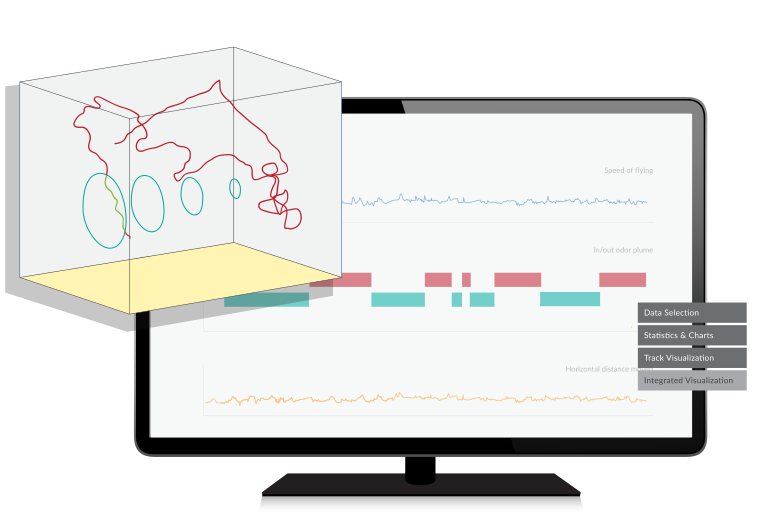
Track3D allows the researcher to record the movement of an animal in a test chamber, visualize the resulting trajectory in a three-dimensional image and calculate a number of movement parameters. The system is suitable for almost any test chamber, swim tank or wind tunnel, flexible and very cost-effective. The Track3D software is an add-on module to EthoVision® XT, our video tracking system for the automation of behavioral experiments.
Calibrate your test chamber
In this preparatory step, you instruct the program to determine the relationship between the animal's position in 3D and the projection on the 2D image coming from the video cameras. For this purpose, you a calibration frame is placed in the test chamber. For larger test chambers, you can also combine multiple calibration frames. Calibration is a one-time operation, provided that cameras and test chamber don't move relative to each other.
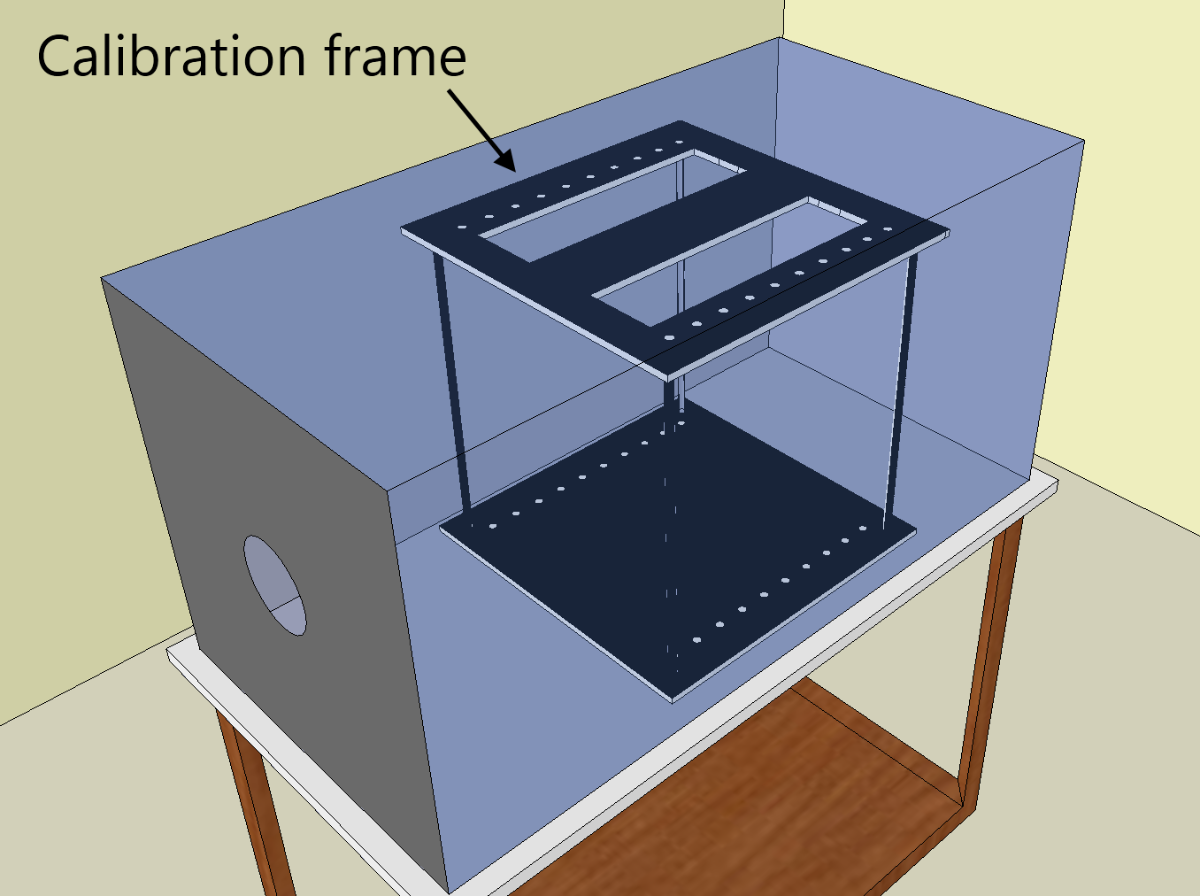
A calibration frame is placed in the test chamber. Calibration in a one-time operation before you can start using Track3D.
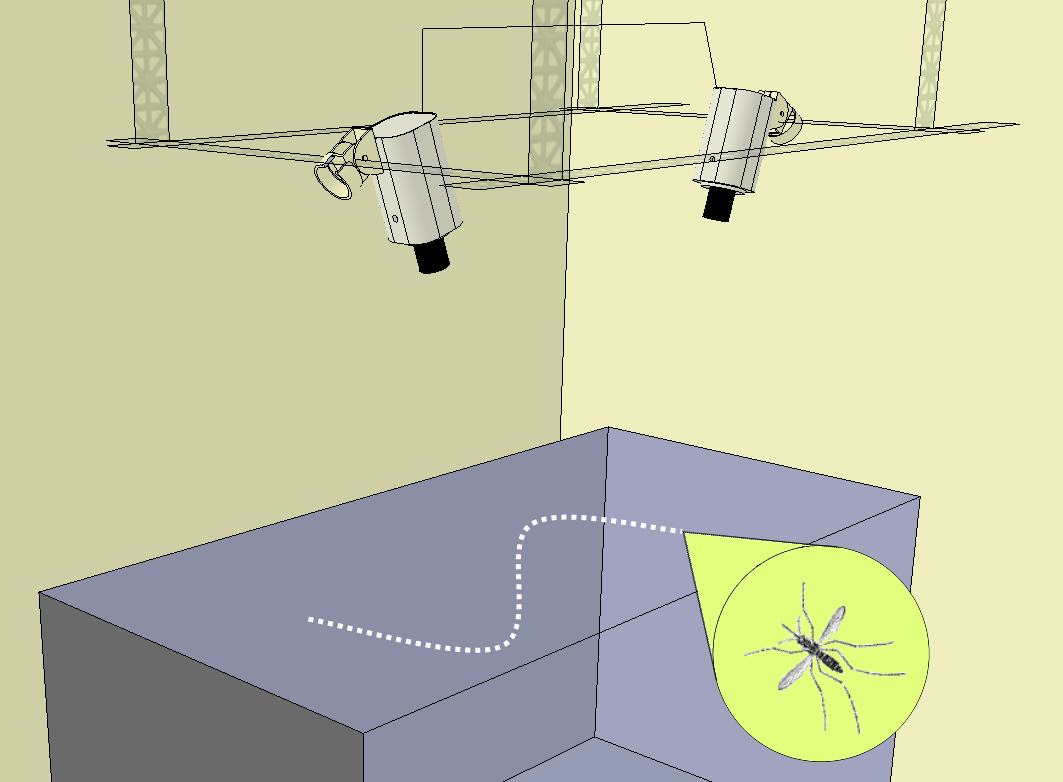
Using Track3D involves three steps
1. Video recording - Release the animal in the test chamber and record video as high-resolution digital video files, one for each camera. The two video recordings will be in perfect sync with each other. This way, the program can reconstruct the 3D position of the animal in each individual video frame. You can also run your tests in complete darkness by using infrared illumination.
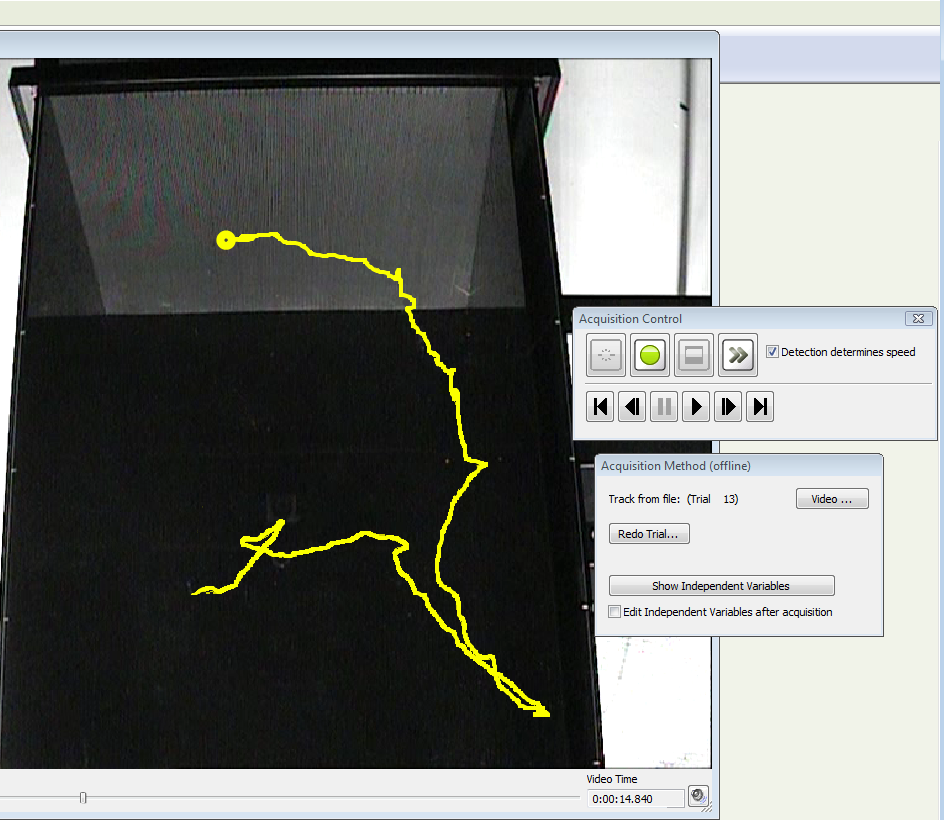
Video tracking
2. Video tracking - Track the animal’s movement from the digital video files using the EthoVision XT software. The program records the two-dimensional coordinates of the moving animal in each individual video image. If desired, you can set EthoVision XT to track from a specific time point in the video.
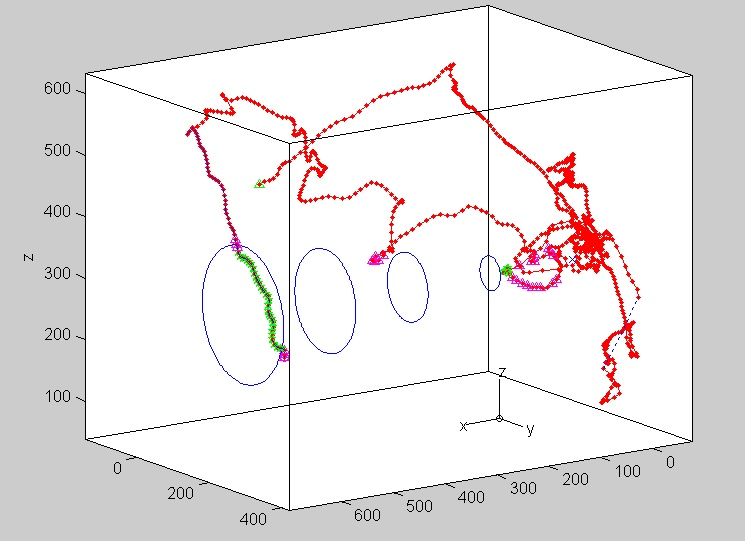
3. Visualization and parameter calculation - Next, you use Track3D to convert the 2D coordinates from each camera view to one set of 3D coordinates. You can visualize the movement track in three dimensions, play back, rotate and zoom in and out for a better view. The program also calculates a large number of flight parameters such as distance moved, absolute and ground speed, and turn angles relative to the different planes.
Relevant blogs
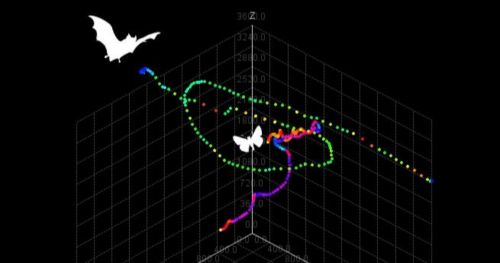
The bat - moth aerial battle in 3D
Moths arrived first on the evolutionary stage; when much later on bats appeared with their sophisticated apparatus for echolocating prey, moths were forced to change or die.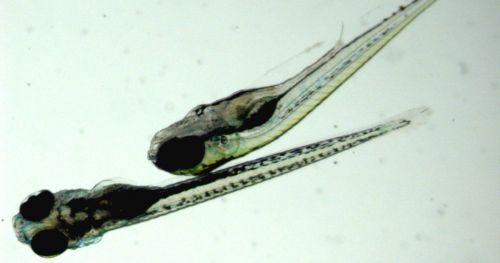
Tracking zebrafish in 3D
Recognizing the lack of hands-on education, Dr. Kalueff has started organizing zebrafish behavioral neuroscience and phenotyping workshops. The workshops ran just before and after the SfN annual meeting, October 2012.