Example labs
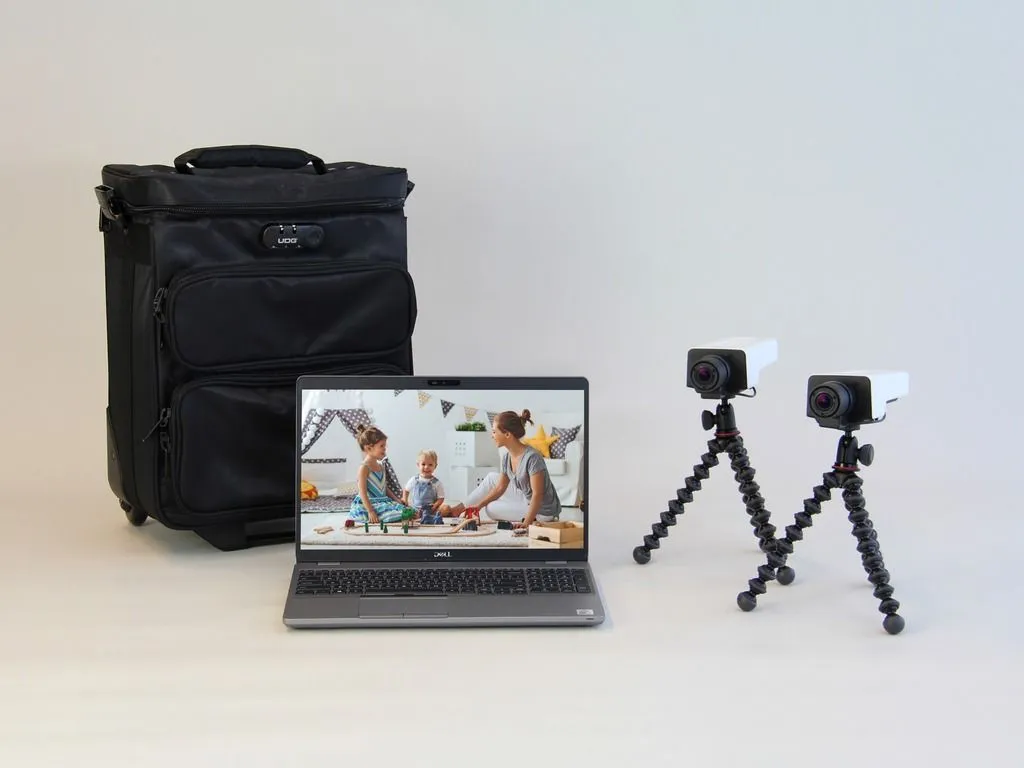
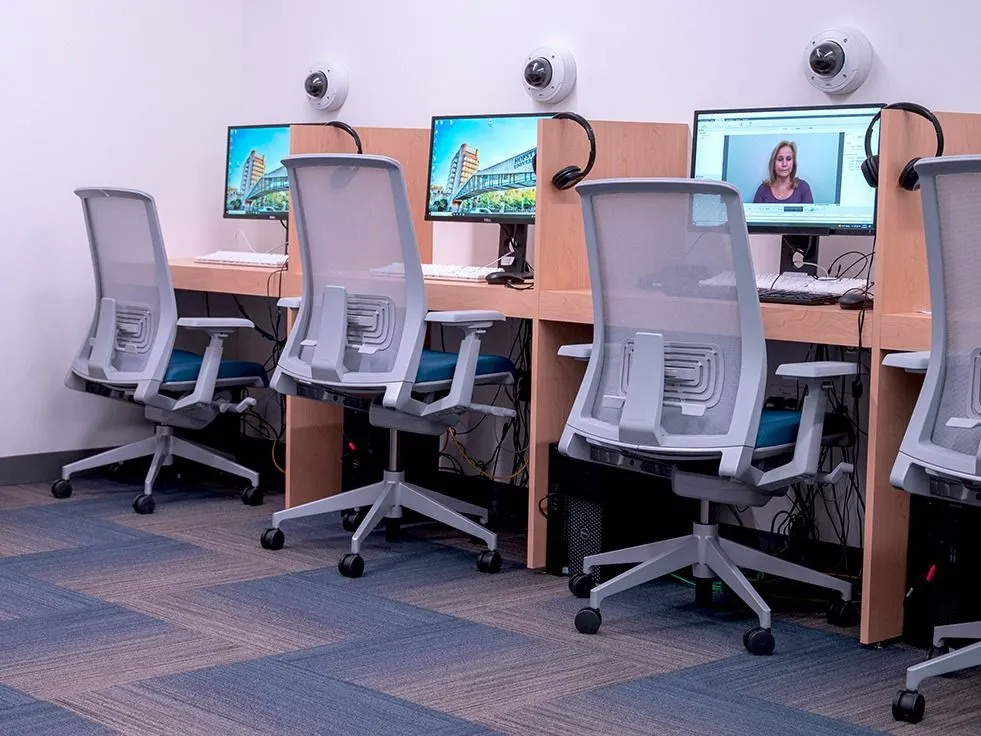
Thirty one usability labs from all over the world, all recently built and in active use, take you on a photographic tour and show you how they designed their rooms, what equipment they use, and which software tools are used for data collection and analysis. The usability lab photo gallery covers a wide range of application domains, organizations and technology: from desktop software to mobile applications, from healthcare to military systems, from consumer electronics to office hardware, from focus groups and qualitative testing to physiological measurements and eye tracking, from corporate to educational facilities, from stationary to portable labs. Enjoy the tours!
LUTIN
LUTIN ("Laboratoire des Usages en Technologies d'Information Numériques") resorts under the CNRS, the French council for scientific research. The LUTIN User Lab has primarily been designed as a facility for companies who wish to evaluate the usability of products, services and digital media, including PDAs, mobile phones and web sites. The lab provides both inside and outside testing through a versatile technical infrastructure solution which can be adapted to many different test requirements.
MAXLab
MAXLab is the first laboratory in Valencia (Spain) that offers a complete set of services for software testing; from Test Process Improvement consultancies, functional and stress test projects, to accessibility and usability inspections and testing.
The laboratory was founded by Dr. Tanja E.J. Vos, director of the SQUAC (Software Quality, Usability, Accessibility, and Correctness) research group of the Instituto Tecnológico de Informática (ITI). ITI is a private non-profit institute, linked with the Technical University of Valencia. This special position allows the SQUAC group to participate in innovative scientific research projects at regional, national, and European level, as well as offering off-the-shelf and custom made testing solutions for Spanish enterprises.
MultiCom
MultiCom is a multidisciplinary team, involved in the design and the evaluation of interactive systems. The human resources include researchers, computer scientists, a statistician, and ergonomists. These various skills allow MultiCom to take part in research projects and industrial contracts concerning new technologies.
Océ Technologies
Océ is one of the world's leading suppliers of products and services for professional printing and document management; from document creation and design through to distribution and archiving. To equip our customers with high-end technology, Océ consistently invests more than 6 per cent of turnover in innovation. The Océ R&D program now comprises over 2000 people, including some 500 software specialists working in competence centers around the world. The resulting technologies enable unique applications in Cutsheet printing, Continuous-feed printing, Wide format printing, Color printing, Document management software and Imaging supplies.
Open University of the Netherlands
The mission of the Open University of the Netherlands is twofold: to offer students an alternative form of higher education by means of guided independent study, and to encourage innovation in higher education. Such innovation demands expertise of a specific kind. At the Open University of the Netherlands, that expertise is channeled through the Educational Technology Expertise Centre (OTEC). The Educational Technology Expertise Centre wants to be a leading party, nationally and internationally, in the field of educational technology. OTEC research is focused on educational innovation and technology. Our projects are directed towards competency-based learning in higher education, using educational technology.
One of OTEC’s research facilities is the Multimedia Lab. This page presents a few overviews and close-ups of equipment regularly used for usability testing in the Multimedia Lab.
Philips HomeLab
Homelab is a permanent fully functional home laboratory built to study how people interact with prototypes of intelligent technology in a real-world environment. Through HomeLab, Philips researchers can better understand their needs and motivations to use technology, and bring better products to market in the quickest possible timeframe.
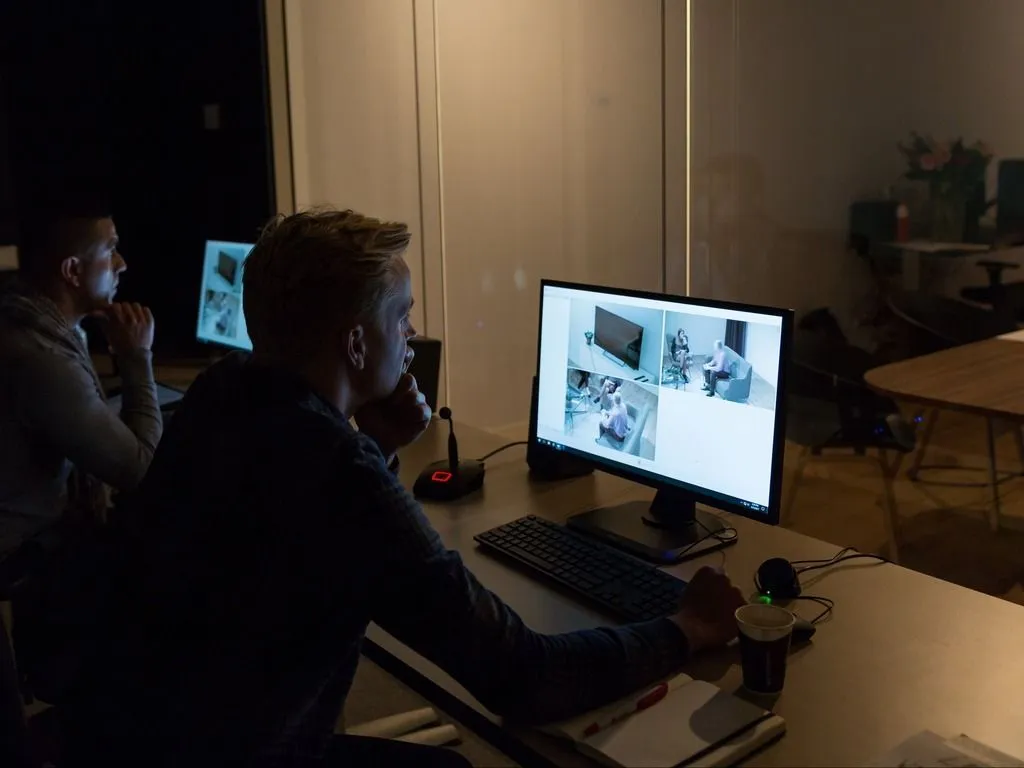
Homelab is also a laboratory where everything that happens can be observed, recorded and learned from. People moving around the HomeLab are watched by an observation leader and a team of behavioral psychologists. As HomeLab inhabitants use the technology, researchers can see what they find comfortable and easy, or difficult and confusing.
The researchers use state-of-the-art technology, with a fully digital video observation and recording system. When someone in the HomeLab uses a certain feature, the control-room system records it automatically onto MPEG video. And because it's digital, every time that feature is used, it can be recalled at the touch of a button.
Rabobank
Rabobank Group is a full-range financial services provider founded on cooperative principles. The Group is comprised of 248 independent local Rabobanks in the Netherlands, the central organisation Rabobank Nederland and a large number of specialised subsidiaries. The Group’s core objective is to generate the highest possible customer value. To this end, the organisation offers its clients all the financial products and services they may want. Rabobank Group provides services to more than half of the Dutch population (16 million) and Dutch companies.
In the Netherlands, Rabobank has dominant market positions in almost all financial services areas: home mortgages, savings, small and mediumsized businesses, and the food & agri sector. It has also significantly strengthened its position in the large corporate market. Throughout the world, Rabobank Group, through Rabobank International, focuses primary on financing the international food & agri business, a niche market in which it has a leading position. Rabobank Group has been awarded the highest credit rating (Triple A), and has 267 offices in 38 countries outside the Netherlands.
SBC Laboratories
The SBC Laboratories Human Factors Lab has four individual observation/subject rooms with a separate waiting room. The first three observation rooms are open to one another. Lab 1 is an office setting, lab 2 is a home setting, lab 3 is a home office setting, and lab 4 is a general lab which contains our eye tracking equipment.
We conduct many different types of usability tests for SBC Communications and its family of subsidiaries including websites, phone services (voice mail, wireless, etc.), DSL installation, and self service, phone based applications (call routers, etc.).
Sogei - Società Generale d’Informatica
Sogei has been providing solutions and Information & Communication Technology services for the Italian Tax Administration for 28 years. Sogei was founded in 1976 and its mission was to set up a modern tax system. Sogei, today, is 100% state-owned and constitutes the Tax Administration’s technological partner; it holds a prominent position as it is the leading company in Italy in the ICT sector. According to the e-Europe 2005 Action Plan and the Italian e-Government Programme, Sogei has developed for the Ministry of economy and finance web sites for the delivery of e-services.
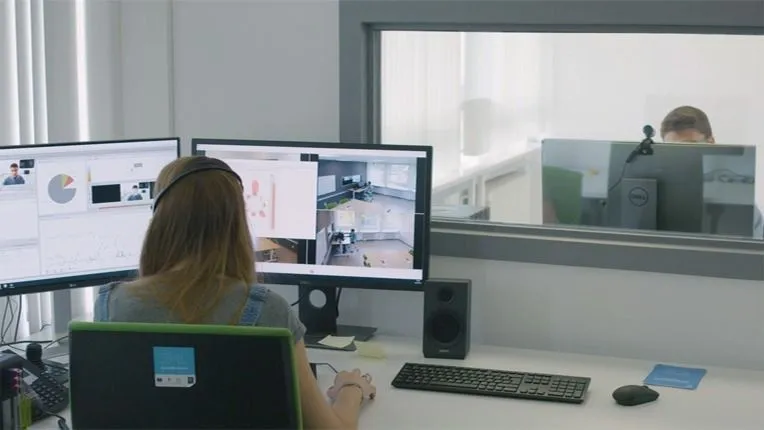
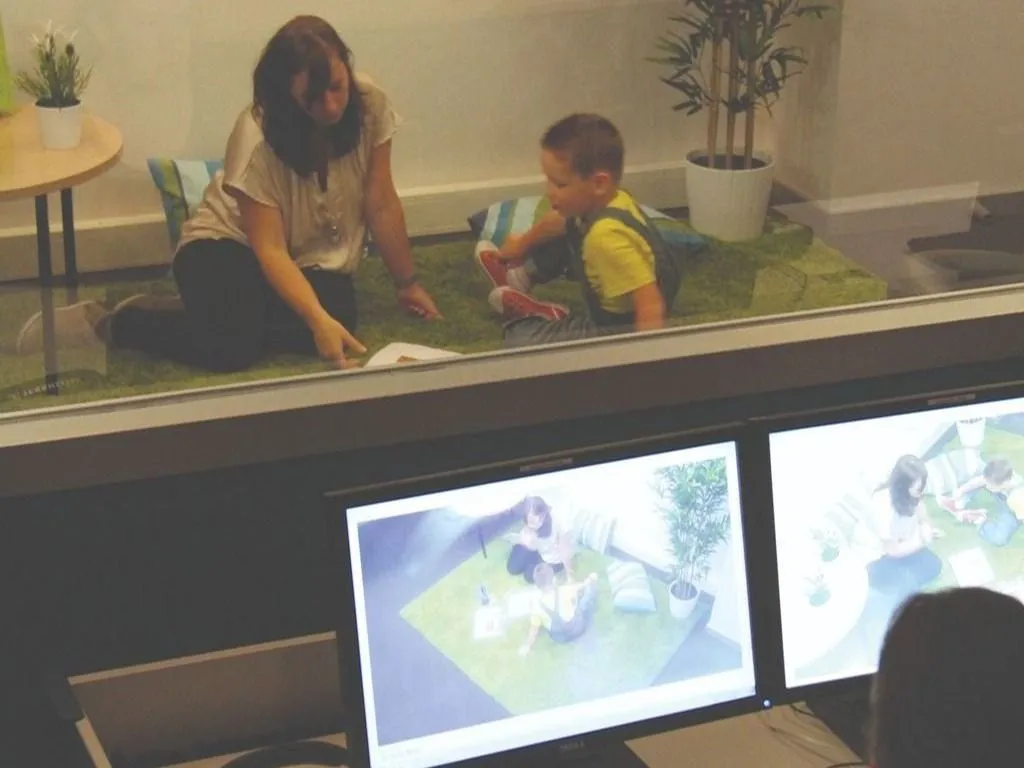
Sogei has been involved in usability research activities since 1992. A Usability Lab was set up in 1994 and its task is the testing of all critical software applications developed for the Italian Tax Administration. Sogei's Usability Lab has been recently improved; it is organised in two logical and physical areas: a user room and a control room, separated by a one-way mirror. A third separate room - the observation room – is linked to the lab with video displays.
Thales Naval Netherlands
Thales is an European high-technology group renowned worldwide for its expertise in electronics-based defence systems and services, particularly for naval forces. The Group is a leading systems prime contractor and integrator with industrial operations in ten countries and clients in 50.