English
 German
 French
 Italian
 Spanish
 Chinese
High-tech customizable labs
Labs
From portable and stationary labs for observation and analysis of human behavior to high-tech turn-key usability labs: Noldus can deliver it. Complete integrated labs; designed with you and built by us.
-
High-tech and customized turn-key labs
-
Superior behavior recording and analysis
-
From complete labs to compact portable labs for on-site research
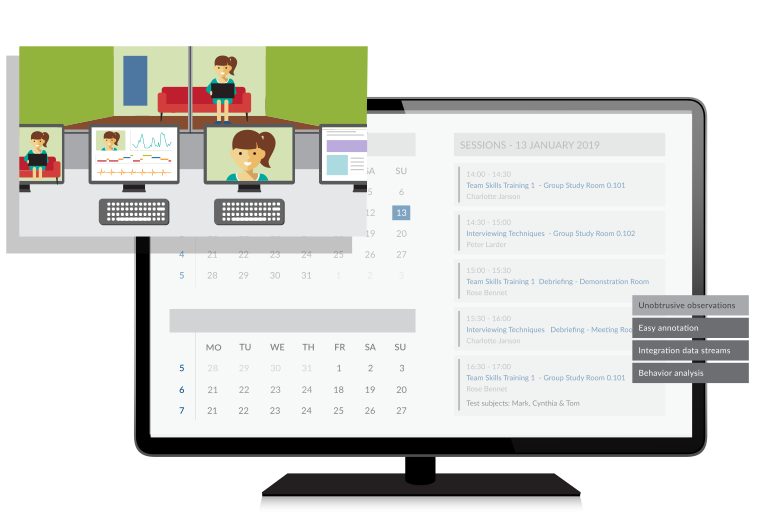
Noldus offers a wide range of flexible tools designed to meet a variety of research demands. If your application requires a unique solution, you can rely on our many years of experience with building labs all over the world to create the perfect lab for you. All equipment is fully integrated including items such as cameras, computers, eye trackers, and physiological measurement systems. For this, we work together with world-class suppliers.
Multimodal lab: easily integrate all your data
An observation can tell you what someone is doing. Why they are doing it, requires additional tools such as physiology, eye-tracking data, and facial expression data. With multimodal measurement you can gain deeper insights into implicit responses and mental processes.
It is vital that different data streams are recorded synchronously or can be easily synchronized after data acquisition. Solutions such as Viso, NoldusHub and The Observer XT make that happen.
Watch the video to see an example of how such a multimodal lab can be used.

“We need a lab that works; where people very quickly can learn how to work with all the software and the technology.
That is what we got from Noldus.”
Dr. S. Dietrich|University Leipzig, Germany
Free Interactive Product Portfolio
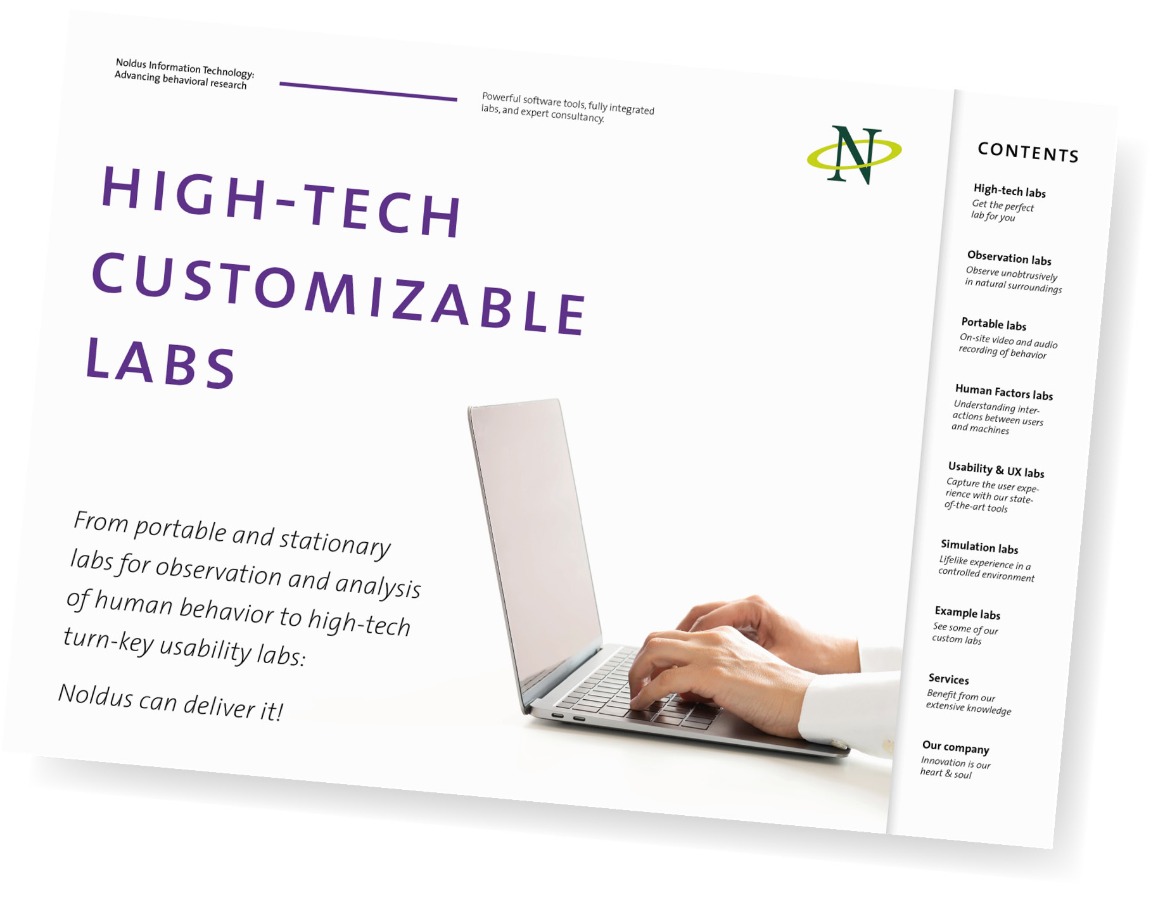
High-tech customizable labs
What motivates people? Why do they do what they do? How do they respond to influences around them? Answering these questions leads to important insights.
How to get there? First control the environment as much as possible when collecting data, for example in a observation lab.
Download our interactive labs portfolio to:
- find out what kind of labs we can build;
- learn how our labs can enrich your research;
- see some of our custom labs around the world.
All-in-one solution for human behavior studies
NoldusHub is our all-in-one software tool for human behavior studies, designed to combine multiple types of measurements and easily achieve trustworthy, high-quality data and direct insights.
Whether you’re an experienced behavioral researcher or a first-time user: NoldusHub is the system for everyone. Discover how NoldusHub benefits your research, and why it is the best multimodal tool for you to use, now and in the future.
Multi-room recording lab: your scalable solution
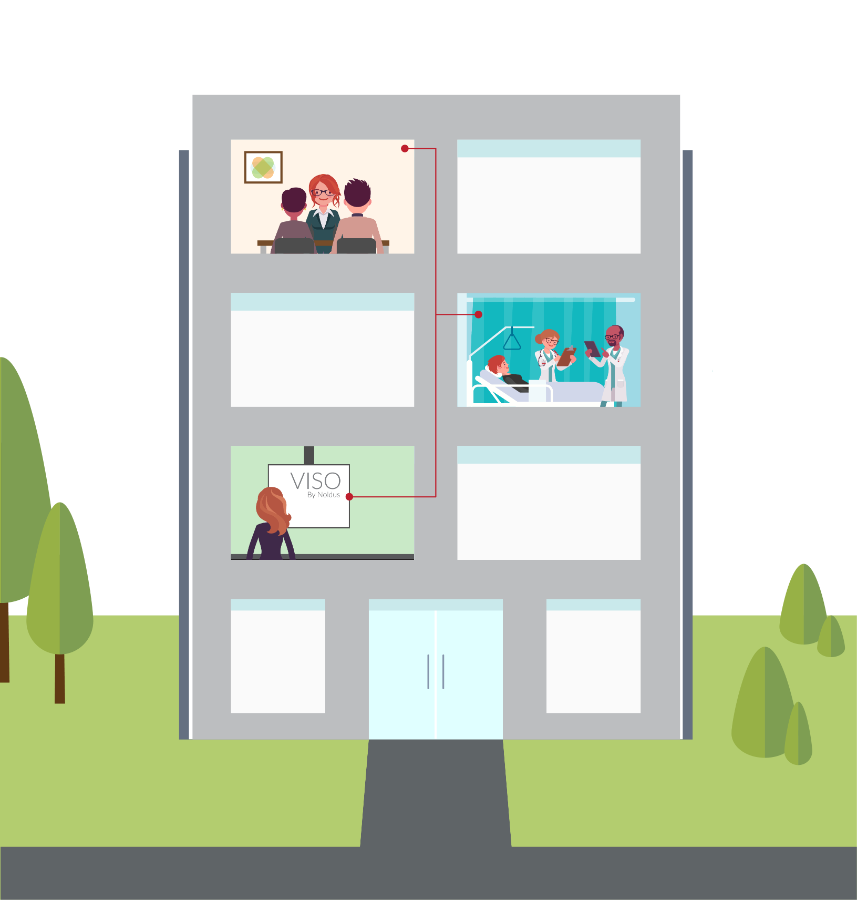
Group training- and simulation-based training sessions, recorded on video, are the ideal way for students and professionals to practice their skills in a variety of fields. The recordings will provide them with feedback immediately after the sessions. When the number of participants is large, a multi-room setup is necessary.
Viso is a modular and highly scalable system, which enables you to design it the way you want and to record group training- or simulation-based training sessions in an unlimited number of rooms. Viso allows for in sync audio and video recording, immediate debriefing, and video playback.
“The integration of FaceReader, The Observer XT, and psychophysiological data collection makes research programs possible at locations and within timetables that increase opportunity, quality, and efficiency.”
Dr. C. Barton|Davidson College, USA
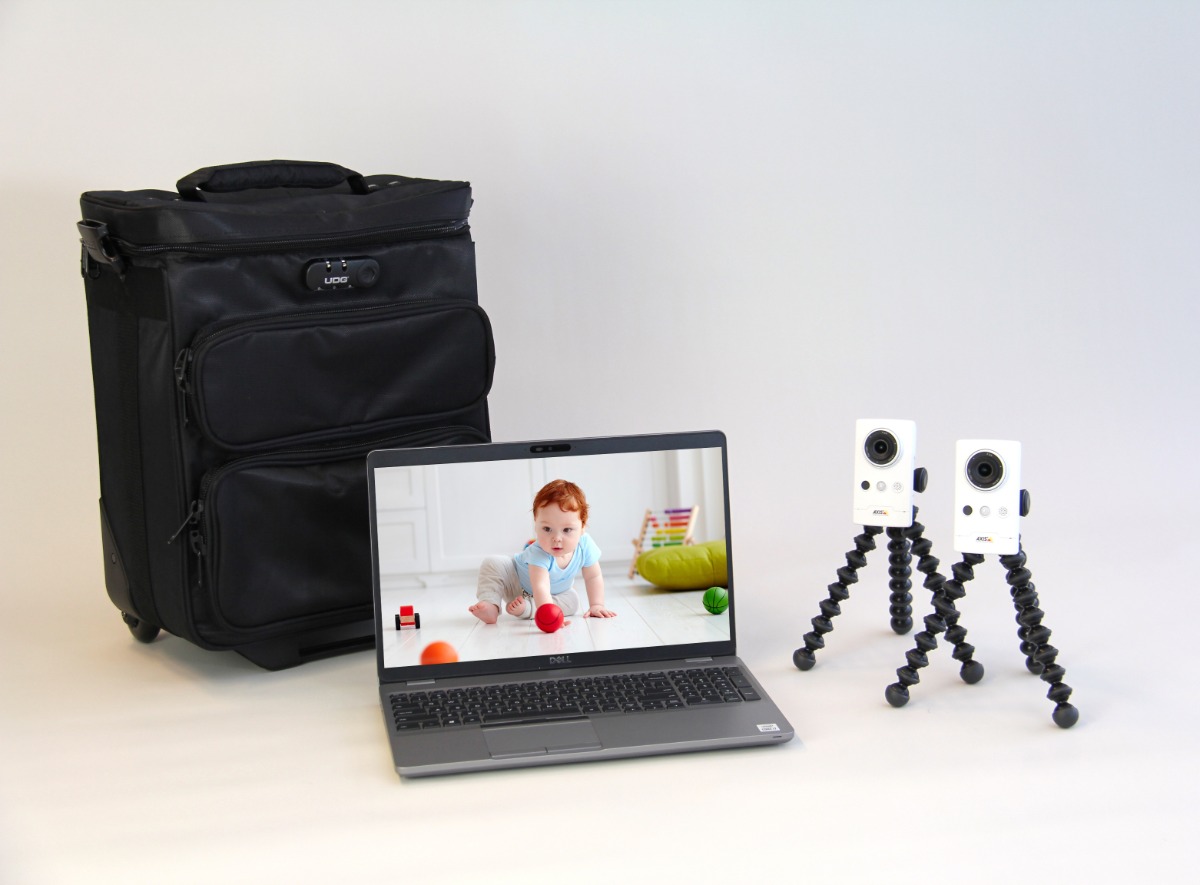
Portable lab
If inviting participants to a stationary lab is not possible, but your research requires observing human subjects, the Portable Lab is the answer! It is more flexible, contains less equipment to install, and it enables you to do research on-site, in the natural environment of the participants.
A portable lab can be set up in under 10 minutes:
- Open the suitcase
- Set up the equipment
- Plug in and start to record


Trusted by researchers around the world
Free white paper
How to build an AV lab
There is no standard audio video lab. For every facility and for every purpose the lab is built for, it will look different.
You might wonder which room is most suitable and what equipment you actually need? And how do you keep an overview of everything that comes with it?
Check out this how to guide for tips & tricks!!
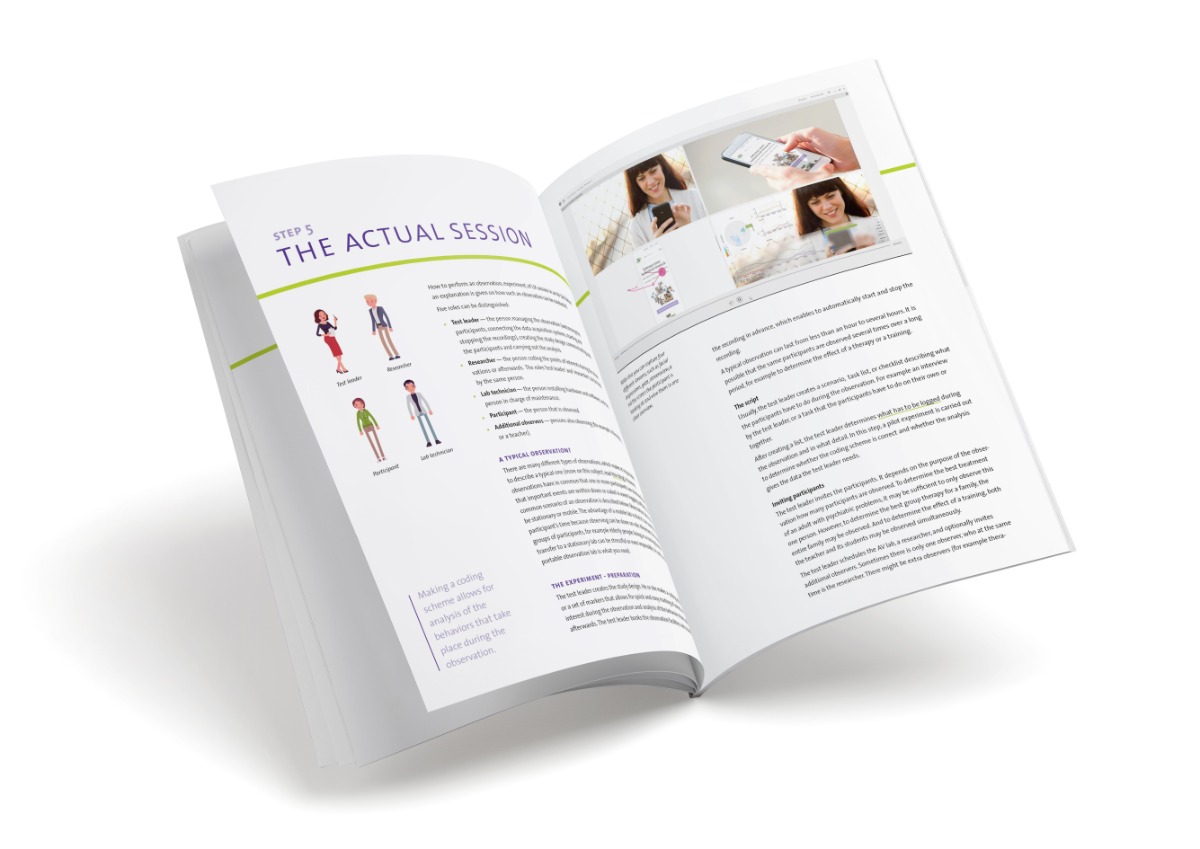
Setting up a well-equiped lab
Noldus works together with customers around the world to provide them with the best possible tools for their research. It’s challenging, measuring behavior in natural environments, such as the consumers' home, but we’re up for a challenge!
When you purchase a Noldus lab, integration and synchronization of all equipment is part of our installation service. You can be sure that your hardware and software will work together, and that all your data is in sync. No matter what kind of research you are working on, we will help you get started quickly!
Relevant blogs
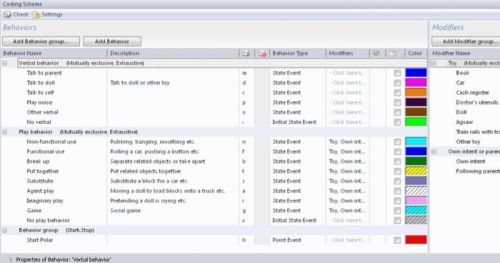
7 Tips how to set up a coding scheme
The coding scheme or ethogram determines what data you collect and is, thus, an essential part of your behavioral study. Tips to set up a coding scheme (+free white paper with all 7 tips to set-up your coding scheme).
Video tracking of children with autism
Automated video tracking is a valuable tool for studies on animal models of autism (ASD). Diagnosis of ASD is based on behavior alone in humans, so naturally, behavior is an important part of human as well as rodent studies.