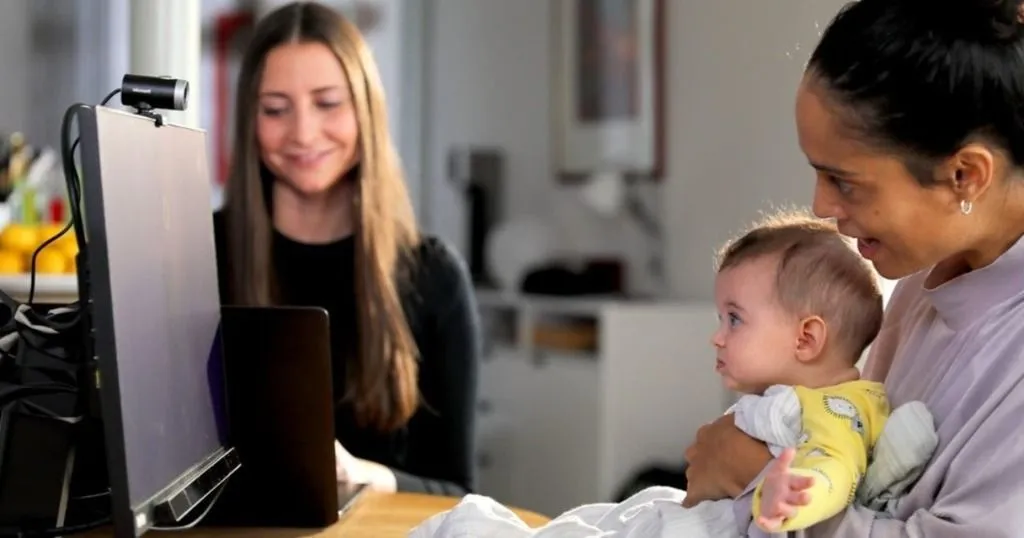
The study of infant behavior provides incredible insight into the field of psychology, developmental biology, neuroscience, and other social and life sciences. A primary method of conducting infant behavior research is observation. Various research tools are available to improve the quality and efficiency of behavioral data acquisition and analysis.
The Observer XT behavioral research tool is one such example that helps researchers gain insight into infant behavior and includes data integration options to take a lab to the next level.
Advantages of combining research methods for infant behavior studies
Various methods exist for studying infant behavior, including recording videos, measuring physiological markers, and analyzing facial expressions. Often, researchers choose to combine these methods [1].
Combining research methods gives researchers the opportunity to gain a more comprehensive view of infant behavior. For example, using multiple methods ensures that the collected data is not limited to participant interviews, as this is typically just parents giving an account of how they think their infant is behaving.
Acquiring different types of information
Supplementing interviews with direct observations of the infant and measuring physiological markers can help strengthen the data being collected. Thus helping researchers to get their research questions answered. By acquiring different types of information on infant behavior, researchers can obtain a more holistic understanding, compare different data types, analyze relationships, and combine the outcomes to come to valid and strongly supported conclusions.
Behavior is a multifaceted and complex topic to study, especially in infants who cannot articulate emotions; therefore, using a combination of research methods ensures a more objective, representative approach to both collecting and interpreting data.
FREE WHITE PAPER
Tools for Infant Studies
Download the free White paper to learn more about the software tools available for infant studies.
-
check_circle
Video observations to capture behaviors
-
check_circle
Coding behaviors accurately
-
check_circle
Unobtrusive emotion analysis
Download
download
Analyzing and integrating data on infant behavior using The Observer XT
Behavioral research is a valuable way to better understand humans by helping to understand connections between disorders or conditions and behavior. For example, research conducted by The University of South Carolina involved early behavioral and physiological markers of social anxiety in infants with fragile X syndrome.
The researchers used a multi-method approach to identify markers like behavioral inhibition, increased attention toward a stranger, and a blunted respiratory sinus arrhythmia response in infants with fragile X syndrome [2]. While data from the parent interviews did not signify a large difference between control and fragile X infant behavior, direct observation identified several behavioral and physiological markers.
Code observation videos
In The Observer XT the video recordings of in this case the Stranger Kneel task were coded for escape behaviors, distress vocalizations, bodily fear, and visual attention. The software enabled the researchers to code the direct observation videos in a structured and reliable way (Cohen's kappa of 0.81-0.90).
Study authors Black and colleagues concluded that the multimodal approach of both interviews and direct observation is integral to helping the researchers understand the complex early characteristics of social anxiety in infants with fragile X syndrome [2]. This knowledge can then be used to address the challenges of the syndrome that can negatively impact infants later in life if left untreated.
Thus, taking a research approach in which data from different data sources can be easily combined in advanced software is crucial in analyzing infant behavior.
FREE TRIAL
Try The Observer XT yourself!
Request a free trial and see for yourself how easy behavioral research can be!
-
check_circle
Work faster
-
check_circle
Reduce costs
-
check_circle
Get better data
Free Trial
arrow_forward
Using The Observer XT to make sense of data
As a previous blogpost mentioned, researchers are amplifying their observations with tools that measure criteria such as pupil reactions, blood pulse, heart rate, and brain activity [3]. To make sense of all the different types of data, robust coding and analysis software for infant behavior research are required.
The Observer XT - behavioral research software from Noldus - provides a complete software solution for studying behavior. The Observer XT can conduct behavior coding in a quantitative way with easy timeline visualization, synchronized data streams, and reliable statistical calculations [4].
Learn more about Observer XT here.
References and further reading
- Psychology research | Noldus. (2022). Psychology Research | Noldus. https://noldus.com/psychology
- Black, C. J.; Hogan, A. L.; Smith, K. D.; Roberts, J. E. (2021). Early behavioral and physiological markers of social anxiety in infants with fragile X syndrome. Journal of Neurodevelopmental Disorders, 13(1). https://doi.org/10.1186/s11689-021-09356-3
- Martinali, J. (2022, January 4). How to easily apply multimodal measurement during research with children. How to Easily Apply Multimodal Measurement during Research with Children | Noldus Information Technology. Read more: Integrating multiple data streams
- Behavioral coding - Event logging software | The Observer XT. (2022). Behavioral Coding - Event Logging Software | the Observer XT. Learn more about The Observer XT