English
 German
 French
 Italian
 Spanish
 Chinese

Tools for studies with the
Radial arm maze
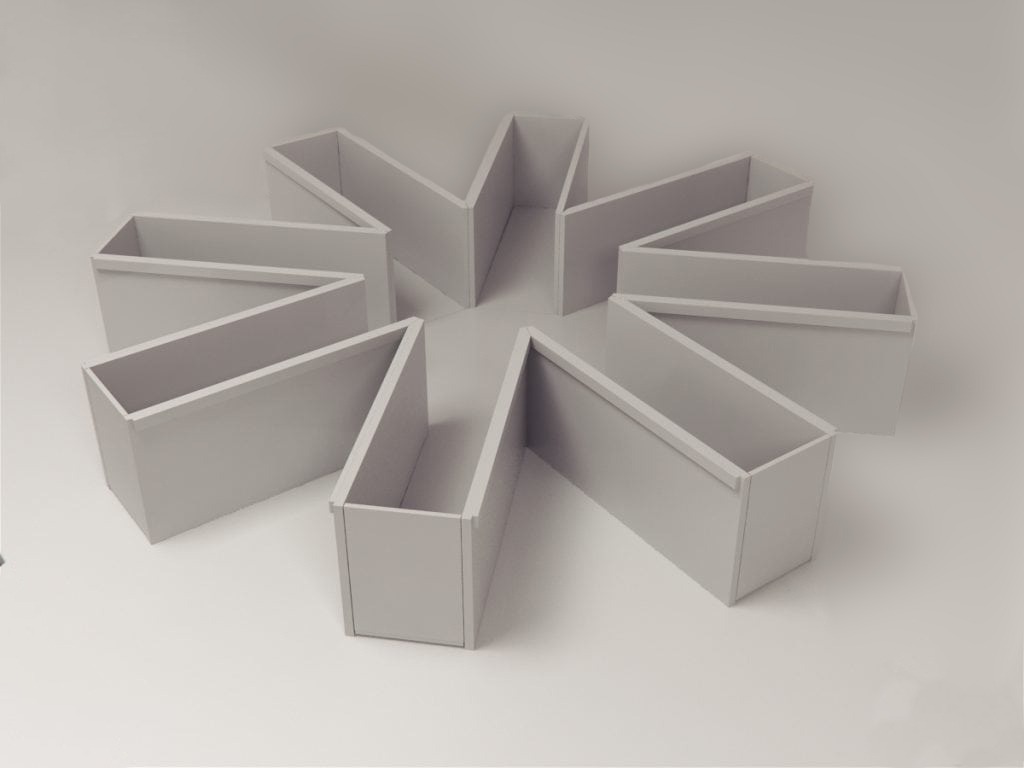
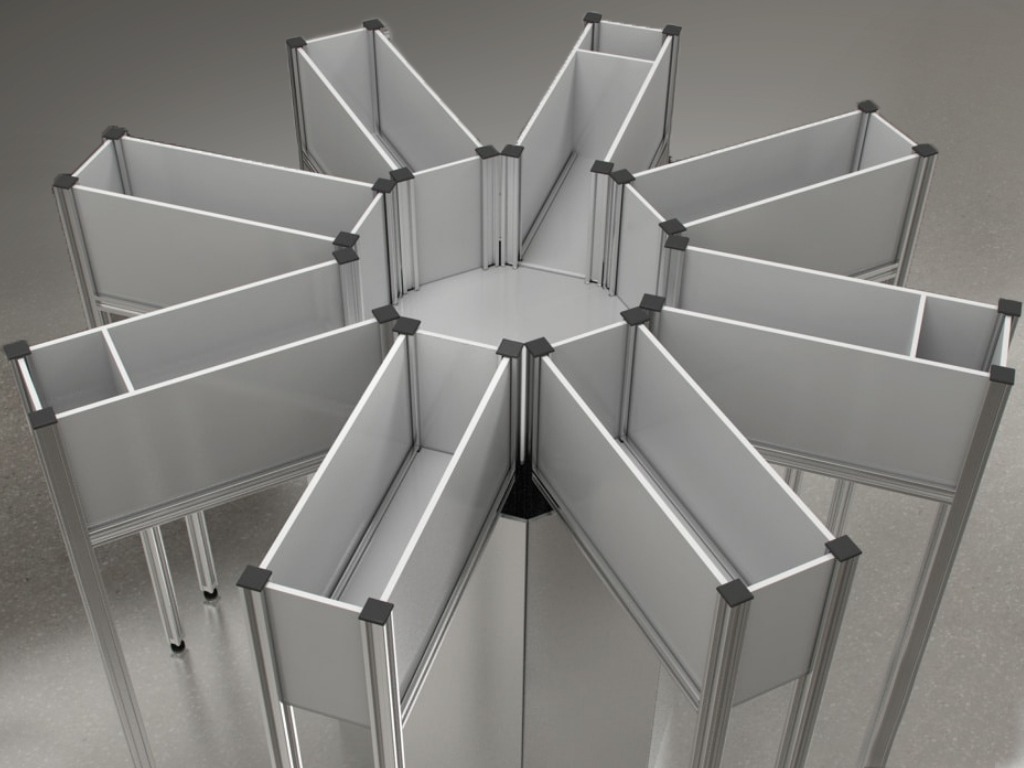
The radial arm maze is a test for spatial, working, and reference learning and memory in rats and mice and allows for several sophisticated test protocols.
For examples, animals might be learning the location of a food reward in one of the arms by relying on cues inside or outside the maze, or memorizing which turns to take from their starting point.

Working memory
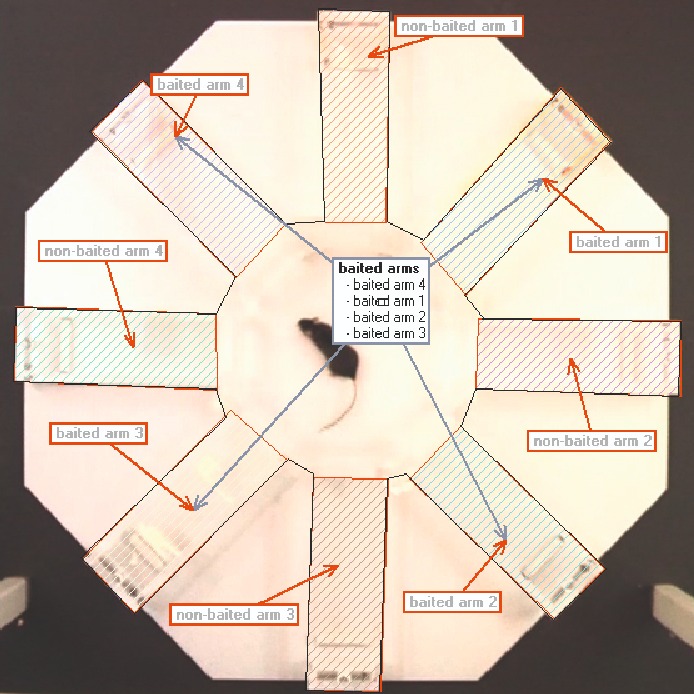
When investigating working memory, all arms are usually provided with a reward and the animal should visit each arm only once. When used for assessing reference memory, only some of the arms contain a reward and the animal should only visit those baited arms. Visits to an arm more than once or visits to non-baited arms count as working memory errors or reference memory errors, respectively.
Made to your specifications
The Noldus radial arm mazes are available in standard sizes and colors, but are just as easily made to your specifications. Think of size differences, a number of arm varieties, wall heights, or even made suitable for water maze testing. All mazes are available in a cost-efficient package deal including a computer and a full EthoVision XT software license for video tracking. This license can also be used for video tracking and automation in other behavioral tests.
Video tracking in a radial arm maze
The radial arm maze is made out of grey acrylic or infrared translucent semi-transparent acrylic. As a result, the maze is easy to clean, and is suitable for video tracking experiment, with either normal light or the use of an IR backlight (and camera). The radial arm maze is optimized for video tracking and is ideally combined with EthoVision XT.
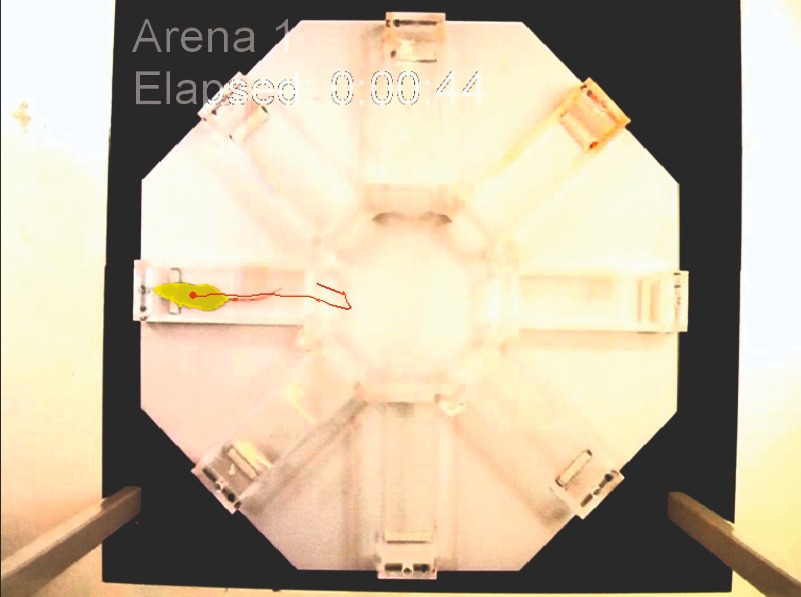
EthoVision XT detects and tracks the center point, nose point, and tail base of mice and rats. This allows for the accurate measurement of an animal’s relative position. For example, you can use it to discriminate between the subject poking only its nose around the corner or moving its entire body into one of the arms of a radial arm maze.
Automation options
There is a wide range of options to choose from in order to automate your radial arm maze experiment. For example, you can add automatic doors or pellet (reward) dispensers. With EthoVision XT you can program these add-ons. For example, you could open doors in a specific order, but only after EthoVision XT has detected the rodent to have visited another arm, collected a reward, and returned to the center for a certain amount of time.
Free e-book
Basic behavioral neuroscience in rodents
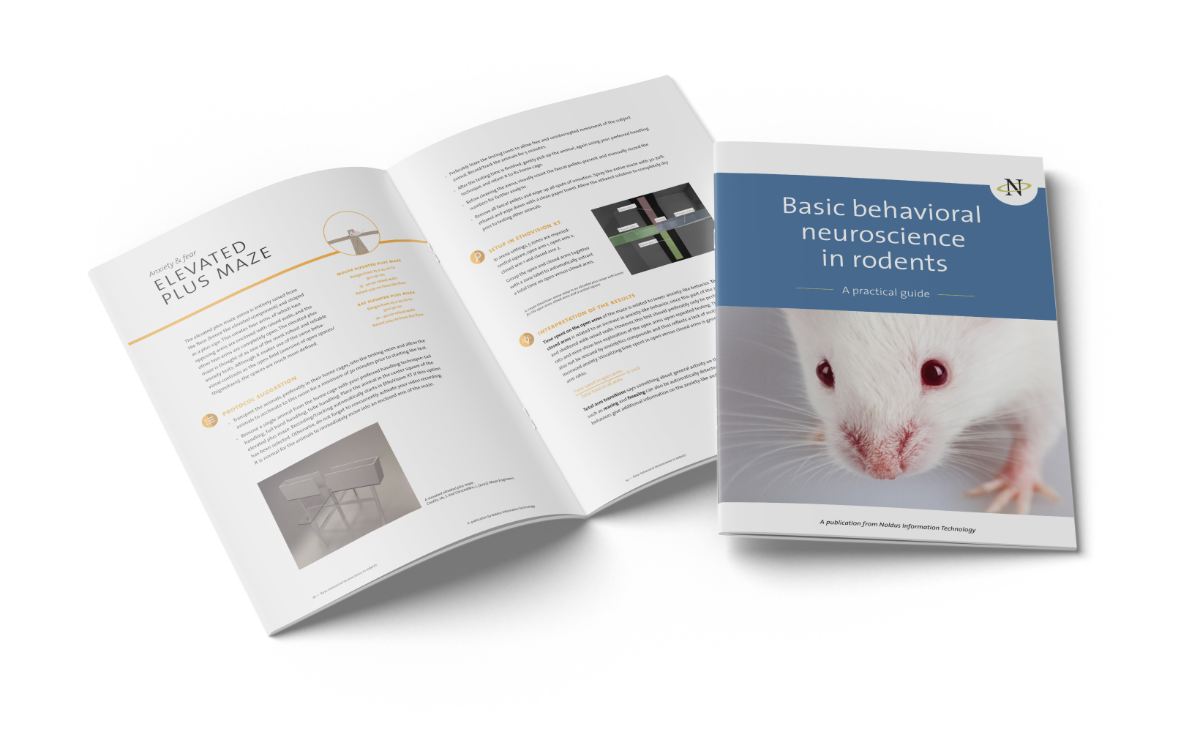
What is the background behind testing learning and memory in rodents in the radial arm maze? How is this done? And what do you need to know before you get started with this test? In our free e-book about the basics of behavioral neuroscience we present a suggested protocol and other background information about the radial arm maze.
Analyzing your radial arm maze test
EthoVision XT automatically calculates parameters such as the total number of arm entries to collect food rewards, the number of visits to each arm, latency until first arm entry, and time spent in each arm. Results are visualized in tables, graphs, and also in integrated visualization with video, tracking, and dynamic graphs.
Free case study
Mice navigation strategies
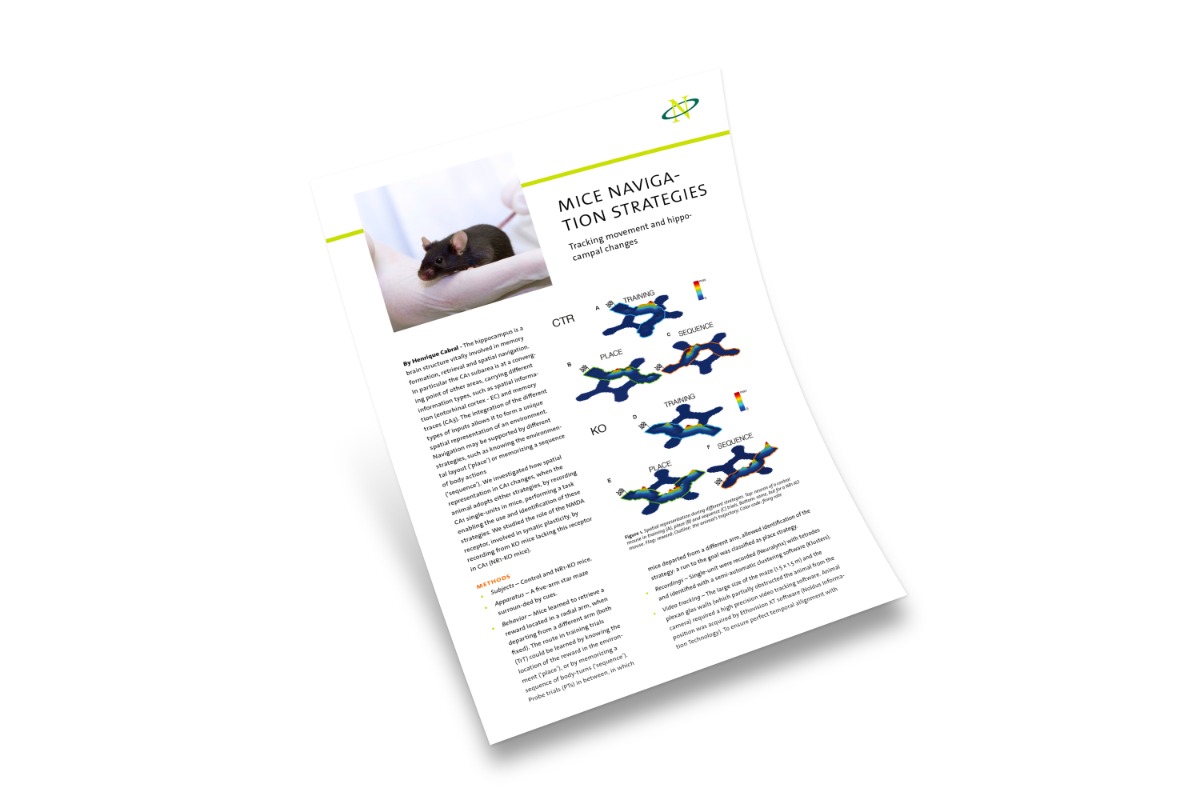
Navigation may be supported by different strategies, such as knowing the environmental layout (‘place’) or memorizing a sequence of body actions (‘sequence’).
The researchers in this case study investigated how spatial representation in CA1 changes, when the animal adopts either strategies.
Download the free case study and learn more!
Alternative suppliers
Noldus mazes can be custom built to your specifications. They are optimally suited for video tracking with EthoVision XT and are available in a package deal. Alternatively, we also offer mazes from several suppliers such as Ugo Basile and Maze Engineers (availability may depend on your location).
Relevant blogs
5 blogs on why you should use video tracking in behavioral research
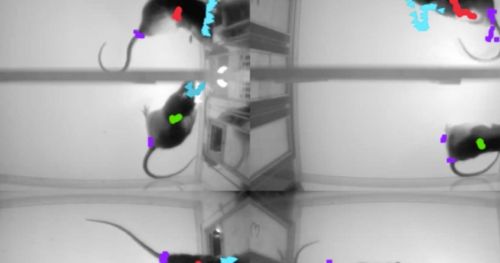
In this blogpost you can find an overview of our top 5 favorite blogs on why you should use video tracking in your behavioral research.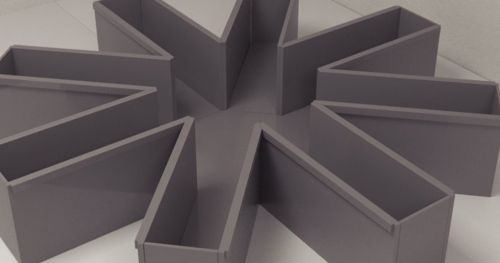
Radial Arm Maze: The Basics
The radial arm maze is an apparatus consisting of a circular center compartment from which 8 equally spaced «arms» extend. Researchers use it to measure two forms of memory known as “reference memory” and “working memory.”